


Can You Reverse Facial Aging Without Surgery?

Updated: 9 hours ago
Physician | Facial Aging & Structural Rejuvenation
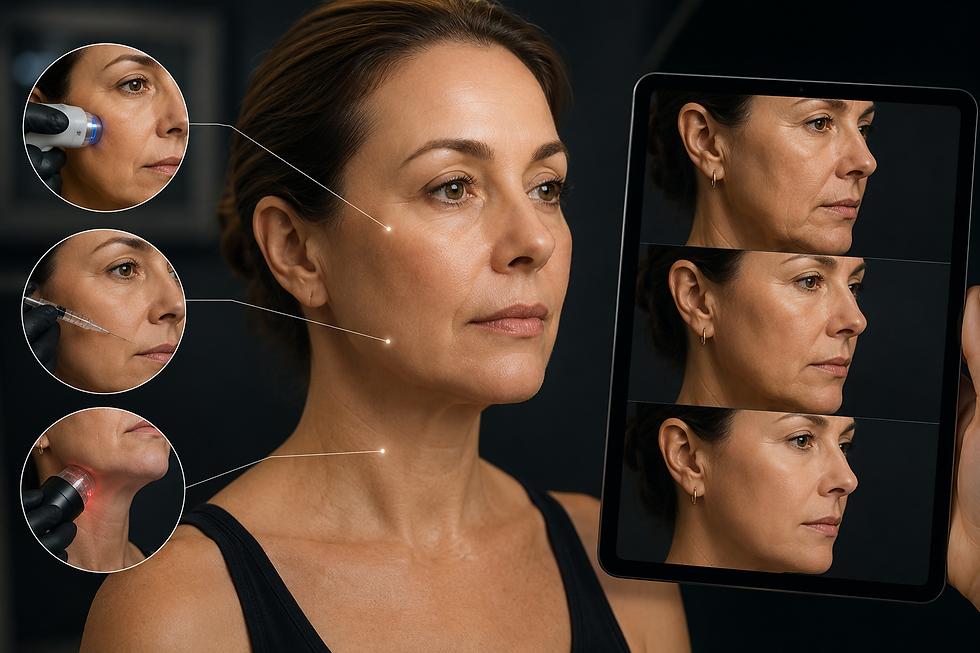
One of the most common questions patients ask is:
“Can I reverse facial aging without surgery?”
The answer is both yes and no.
Many signs of facial aging can be improved without surgery by first understanding the mechanisms of facial aging. Skin quality can be enhanced. Volume loss can be addressed. Early jowls may improve. Facial contours can often be restored to a more youthful appearance.
However, no non-surgical treatment can completely stop aging or fully replicate the results of a facelift.
Understanding what is possible—and what is not—is one of the most important steps in creating realistic expectations and achieving natural results.
The key is understanding why the face has aged in the first place.
Can Facial Aging Be Reversed Without Surgery?
Many signs of facial aging can be improved without surgery, including skin quality, volume loss, mild skin laxity, and early jowl formation. However, non-surgical treatments cannot fully replicate the results of a facelift or reverse advanced aging.
What Causes Facial Aging?
Facial aging is often thought of as a skin problem.
In reality, aging affects every layer of the face.
These changes occur gradually over decades and include:
Structural support loss
Volume loss
Tissue descent
Changes in muscle activity
Skin quality deterioration
Every individual experiences these changes differently, which explains why some faces age better than others.
Some patients lose facial volume and appear hollow.
Others develop heaviness in the lower face.
Some maintain excellent facial structure but develop significant skin aging.
Because aging patterns vary, treatment recommendations should vary as well.
What Does “Reverse Aging” Really Mean?
When patients ask about reversing aging, they are usually referring to improvements in:
Jawline definition
Jowls
Facial contours
Skin quality
Neck appearance
Overall facial harmony
The goal is rarely to look twenty years younger.
Most patients simply want to look:
More refreshed
Less tired
Healthier
More confident
This distinction is important because many non-surgical treatments can meaningfully improve appearance without dramatically altering facial identity.
What Non-Surgical Treatments Can Improve?
Modern aesthetic medicine offers several options capable of addressing specific aspects of aging.
The degree of improvement depends largely on the patient’s anatomy and aging pattern.
Skin Quality
Skin quality often responds very well to treatment.
Potential improvements include:
Texture
Fine lines
Pigmentation
Elasticity
Overall skin appearance
Patients frequently notice improvements in skin health even when structural changes remain present.
Volume Loss
Loss of facial volume contributes to:
Hollow temples
Tear troughs
Flat cheeks
Loss of contour
In appropriately selected patients, restoring volume can create a more youthful appearance and improve facial proportions.
Early Skin Laxity
Patients with mild to moderate laxity may benefit from treatments designed to stimulate collagen production and improve tissue support.
These treatments are generally most effective before significant tissue descent develops.
Jawline Definition
In selected patients, non-surgical approaches may improve jawline contour and reduce the appearance of early jowls.
The degree of improvement depends heavily on the underlying cause.
What Non-Surgical Treatments Cannot Do
Understanding limitations is just as important as understanding possibilities.
Non-surgical treatments cannot:
Remove excess skin
Reposition severely descended tissues
Fully recreate facelift results
Reverse advanced aging
Patients with significant tissue descent or severe lower-face heaviness may achieve only modest improvement with non-surgical approaches.
This does not mean treatment is unsuccessful.
It simply means that every treatment has limitations.
Why Some Patients Respond Better Than Others
One of the most important concepts in facial rejuvenation is that not all patients respond equally.
The same treatment can produce dramatically different results in different individuals, which is why skin tightening results vary from patient to patient.
Why?
Because aging patterns differ.
The Volume-Loss Patient
These patients often present with:
Hollow cheeks
Tear troughs
Reduced facial fullness
They may respond well to treatments that restore support and contour.
The Mild Laxity Patient
These patients often present with:
Early jowls
Mild skin laxity
Good facial structure
They frequently represent some of the best candidates for non-surgical rejuvenation.
The Heavy-Face Patient
These patients often present with:
Lower-face fullness
Jowls
Neck heaviness
Reduced jawline definition
This aging pattern is generally more challenging to treat non-surgically because excess tissue often contributes significantly to the appearance.
Understanding which category best describes a patient is critical when selecting treatment.
Why Assessment Matters More Than Treatment
Patients often ask:
“What is the best treatment?”
A more useful question is:
“What is causing my face to age?”
The answer comes from a comprehensive facial aging assessment. Two individuals with similar concerns may require completely different treatment plans.
For example:
Two patients may both complain about jowls.
One may have:
Volume loss
Reduced support
Mild laxity
The other may have:
Tissue heaviness
Fat accumulation
Significant descent
Although the symptom appears similar, the underlying causes are entirely different.
The treatment should reflect those differences.
Can Non-Surgical Treatments Delay Surgery?
In many cases, yes.
Patients who begin treatment earlier in the aging process often maintain facial contours and skin quality longer.
This does not necessarily eliminate the future need for surgery.
However, it may delay the point at which surgery becomes desirable.
For many patients, this represents an attractive middle ground.
When Surgery Becomes the Better Option
There comes a point where surgery often provides the most predictable improvement.
Patients with:
Significant tissue descent
Marked neck aging
Severe skin laxity
may achieve greater improvement with surgical intervention than with non-surgical treatment alone.
This is not a failure of non-surgical treatments.
It is simply a reflection of anatomy and the realities of aging.
The goal should always be selecting the treatment that best matches the patient’s needs.
The Future of Facial Rejuvenation
The future of facial rejuvenation is becoming increasingly personalized.
Advances in imaging, facial analysis, and treatment planning allow clinicians to better understand why each individual ages differently.
Rather than applying the same treatment to everyone, modern rejuvenation focuses on identifying:
The dominant aging mechanisms
The patient’s aging pattern
The most appropriate treatment strategy
This approach leads to more natural outcomes and better long-term planning.
Final Thoughts
Many signs of facial aging can be improved without surgery.
Skin quality can be enhanced. Volume can be restored. Early laxity can often be addressed. Facial contours may be improved.
However, the degree of improvement depends on the individual’s anatomy, aging pattern, and expectations.
The most important question is not whether aging can be reversed.
The most important question is understanding why the face has aged in the first place.
Because once the underlying causes are identified, the path toward meaningful rejuvenation becomes much clearer.
Wondering if you’re a candidate for non-surgical facial rejuvenation?Every face ages differently. A personalized facial aging assessment can help determine the mechanisms driving your aging and identify the treatment options most appropriate for your anatomy and goals.
Medical information note:** This article provides general educational information and is not a substitute for an individual medical assessment. Treatment suitability, risks, recovery, and expected results vary with anatomy, health history, treatment area, and technique.
Related Articles
About the Author
Dr. Willem J. Gouws, MBChB, CCFP
Dr. Willem Gouws is a physician practicing aesthetic medicine in Vancouver and Squamish, British Columbia. His clinical focus includes facial aging assessment, lower-face rejuvenation, structural facial rejuvenation, ultrasound-guided treatments, and skin-tightening technologies. He is a QuantumRF trainer in Canada and is actively involved in developing frameworks for facial aging analysis and treatment planning.


Comments