


What Makes Someone a Good Candidate for Non-Surgical Rejuvenation?

Updated: 9 hours ago
Physician | Facial Aging & Structural Rejuvenation

Who Is a Good Candidate for Non-Surgical Rejuvenation?
The best candidates for non-surgical rejuvenation typically have mild to moderate facial aging, good skin quality, reasonable structural support, and realistic expectations. The most important factor is understanding how the face has aged and matching treatment to the individual’s anatomy.
One of the most common questions patients ask during consultation is:
“Am I a good candidate for non-surgical rejuvenation?”
It is an important question because not every face follows the same facial aging pattern.
Some individuals achieve remarkable improvements without surgery.
Others may see more modest changes.
The difference often has less to do with the treatment itself and more to do with the anatomy being treated.
Understanding what makes someone a good candidate for non-surgical rejuvenation is one of the most important steps in creating realistic expectations and successful outcomes.
There Is No Single “Perfect” Candidate
Many patients assume that candidacy depends primarily on age.
In reality, age is only one factor.
A healthy 65-year-old with mild laxity may respond better than a 45-year-old with significant tissue heaviness and advanced jowling.
The more important question is:
How has the face aged?
Understanding the mechanisms of facial aging helps answer that question. The answer often determines which treatments are likely to produce meaningful improvement.
The Best Candidates Usually Have Early to Moderate Aging
Non-surgical treatments generally perform best when aging changes are still relatively early.
Common characteristics include:
Mild to moderate skin laxity
Early jowl formation
Loss of jawline definition
Good skin quality
Reasonable structural support
These patients often achieve visible improvement because there is less aging to overcome.
The tissues still possess enough elasticity and support to respond favorably.
Good Skin Quality Matters
Skin quality plays a major role in treatment outcomes.
Patients with healthier skin often demonstrate:
Better collagen response
Improved healing
More predictable results
Factors that contribute to skin quality include:
Sun protection
Skincare habits
Smoking history
Genetics
Overall health
While poor skin quality does not eliminate candidacy, it may influence both treatment selection and expectations.
Structural Support Influences Outcomes
The facial skeleton serves as the foundation of the face.
Patients with:
Good chin projection
Strong mandibular support
Favorable facial proportions
often maintain facial contours longer and respond more predictably to non-surgical treatments.
When structural support is severely diminished, treatment becomes more challenging.
This does not mean improvement is impossible.
It simply means expectations should be adjusted accordingly.
Mild to Moderate Laxity Often Responds Well
Patients with early tissue laxity frequently represent some of the best candidates for non-surgical rejuvenation. These patients are also among those who typically achieve the best skin tightening results.
Typical concerns include:
Early jowls
Mild neck laxity
Softening jawline contours
Because tissue descent remains limited, improvements in support and skin quality can produce meaningful changes.
This is one reason many patients benefit from treatment before aging becomes severe.
Patients With Realistic Expectations Tend to Be Happiest
One of the strongest predictors of satisfaction is not anatomy.
It is expectations.
Patients who understand that:
Non-surgical treatments improve
Surgery repositions
tend to be much happier with their outcomes.
The goal is often improvement rather than perfection.
A refreshed appearance is usually a more realistic objective than complete reversal of aging.
The Volume-Loss Patient
Patients with significant volume loss often present with:
Hollow temples
Tear troughs
Flattened cheeks
Loss of facial support
These individuals may be excellent candidates when treatment plans address the underlying loss of support and contour.
Volume-deficient faces often respond differently than patients with facial heaviness.
Understanding this distinction is essential.
The Mild-Laxity Patient
This group often represents the ideal non-surgical candidate.
Common characteristics include:
Mild skin laxity
Early jawline changes
Minimal heaviness
Good facial structure
These patients frequently achieve some of the most visible improvements because treatment directly targets the dominant aging mechanism.
Patients Who May Be More Challenging
Some aging patterns are inherently more difficult to treat.
Examples include:
Characteristics:
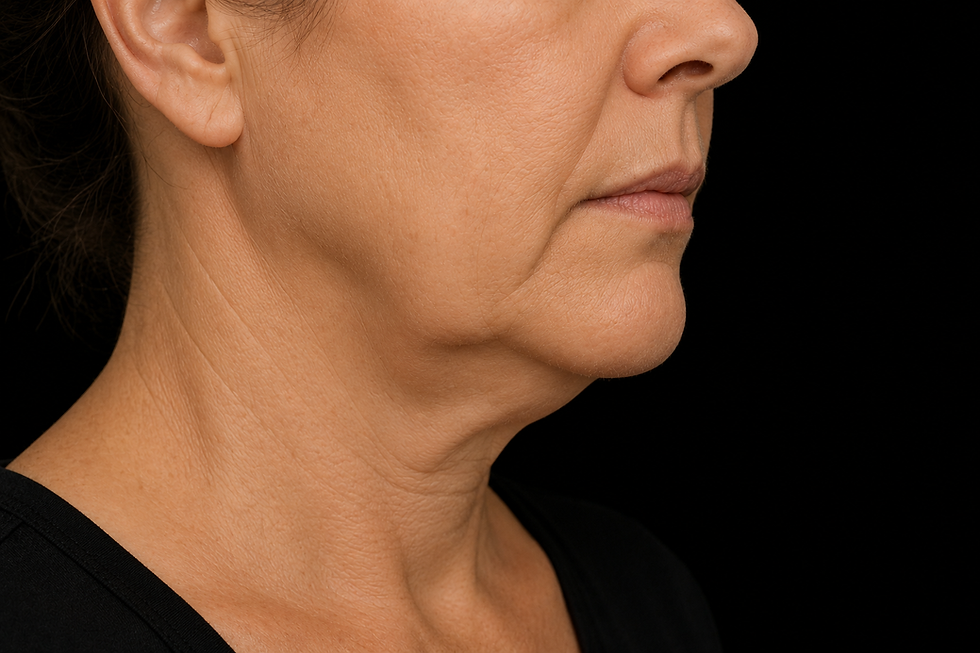
Lower-face fullness
Jowls
Neck heaviness
Loss of contour
These patients often require more complex treatment planning.
Advanced Tissue Descent
Characteristics:
Significant jowls
Advanced neck aging
Marked laxity
Although improvement is still possible, the magnitude of change may be less dramatic than what surgery can achieve.
When Surgery May Be the Better Option
There are limits to every treatment.
Patients with:
Significant excess skin
Advanced tissue descent
Severe neck aging
Marked facial heaviness
may achieve greater improvement through surgical intervention.
Recognizing these situations is part of responsible treatment planning.
The goal should always be selecting the treatment most likely to achieve the patient’s desired outcome.
Why Assessment Matters
Two patients may have identical concerns.
Both may complain about:
Jowls
Jawline definition
Facial aging
Yet their anatomy may be completely different.
One patient may be an excellent non-surgical candidate.
The other may be better served by surgery.
Without a comprehensive facial aging assessment, it is impossible to know the difference.
This is why facial rejuvenation should always begin with diagnosis rather than treatment selection.
The Future of Personalized Rejuvenation
As imaging and facial analysis technologies continue to improve, treatment planning is becoming increasingly individualized.
Rather than treating every patient the same way, modern facial rejuvenation focuses on:
Aging patterns
Facial structure
Volume distribution
Tissue position
Skin quality
This approach allows treatment recommendations to become more precise and predictable.
Final Thoughts
Good candidates for non-surgical rejuvenation are not defined by age alone.
The best candidates typically have mild to moderate aging, reasonable structural support, good skin quality, and realistic expectations.
Patients with advanced tissue descent, severe heaviness, or significant excess skin may still benefit from treatment, but often require a different strategy.
The most important step is understanding how the face has aged.
Because when the underlying causes are identified, it becomes much easier to determine which patients are likely to achieve the best outcomes—and which treatment approach is most appropriate.
Medical information note:** This article provides general educational information and is not a substitute for an individual medical assessment. Treatment suitability, risks, recovery, and expected results vary with anatomy, health history, treatment area, and technique.
Related Articles
About the Author
Dr. Willem J. Gouws, MBChB, CCFP, FPA
Dr. Willem Gouws is a physician practicing aesthetic medicine in Vancouver and Squamish, British Columbia. His clinical focus includes facial aging assessment, lower-face rejuvenation, structural facial rejuvenation, ultrasound-guided treatments, and skin-tightening technologies. He is a QuantumRF trainer in Canada and is actively involved in developing frameworks for facial aging analysis and treatment planning.


Comments